The government has admitted the direction of travel
In November 2025 the UK government published a strategy to support the development, validation and uptake of methods that replace animals in science. That matters. It means replacement is not a fringe idea. It is now government policy.
But recognising that animal testing should be replaced is not the same as ending it. The plan still leaves millions of animals in the system, and for dogs it promises reduction, not an end.
When dogs are still being bred, dosed, bled and killed, a slow promise is not enough.
What alternatives exist?
There is no single replacement for every animal experiment. But there are already many better, more human-relevant tools that can reduce and replace animal use.
Human cells and tissues
Instead of forcing substances into animals, scientists can study effects in human-derived cells and tissues. This can make the evidence more directly relevant to people.
Organoids and 3D tissue models
Lab-grown 3D models can mimic features of human organs and disease. They are not perfect, but they are part of a growing move away from using living animals as stand-ins.
Organ-on-chip systems
Tiny devices lined with living human cells can model how parts of the body, such as the liver or lung, respond to drugs and chemicals.
Computer and AI models
Modern data tools can help predict toxicity, drug behaviour and biological effects without putting a substance into an animal’s body.
High-throughput in vitro testing
Large numbers of substances can be screened using lab-based non-animal tests before anything reaches a living being.
Human clinical and real-world data
Carefully gathered human evidence, including clinical and post-market data, can reduce reliance on animals as imperfect predictors of human effects.
Why this matters for dogs
Dogs are often used because companies and regulators want information from a living body. But a beagle is not a small human. A dog has a dog’s body, a dog’s nervous system, and a dog’s capacity for fear, pain and stress.
When human-relevant methods exist, the moral burden should be on those who still want to use dogs — not on the public to accept their suffering as inevitable.
The question is not whether alternatives are imaginary. The question is why dogs are still waiting.
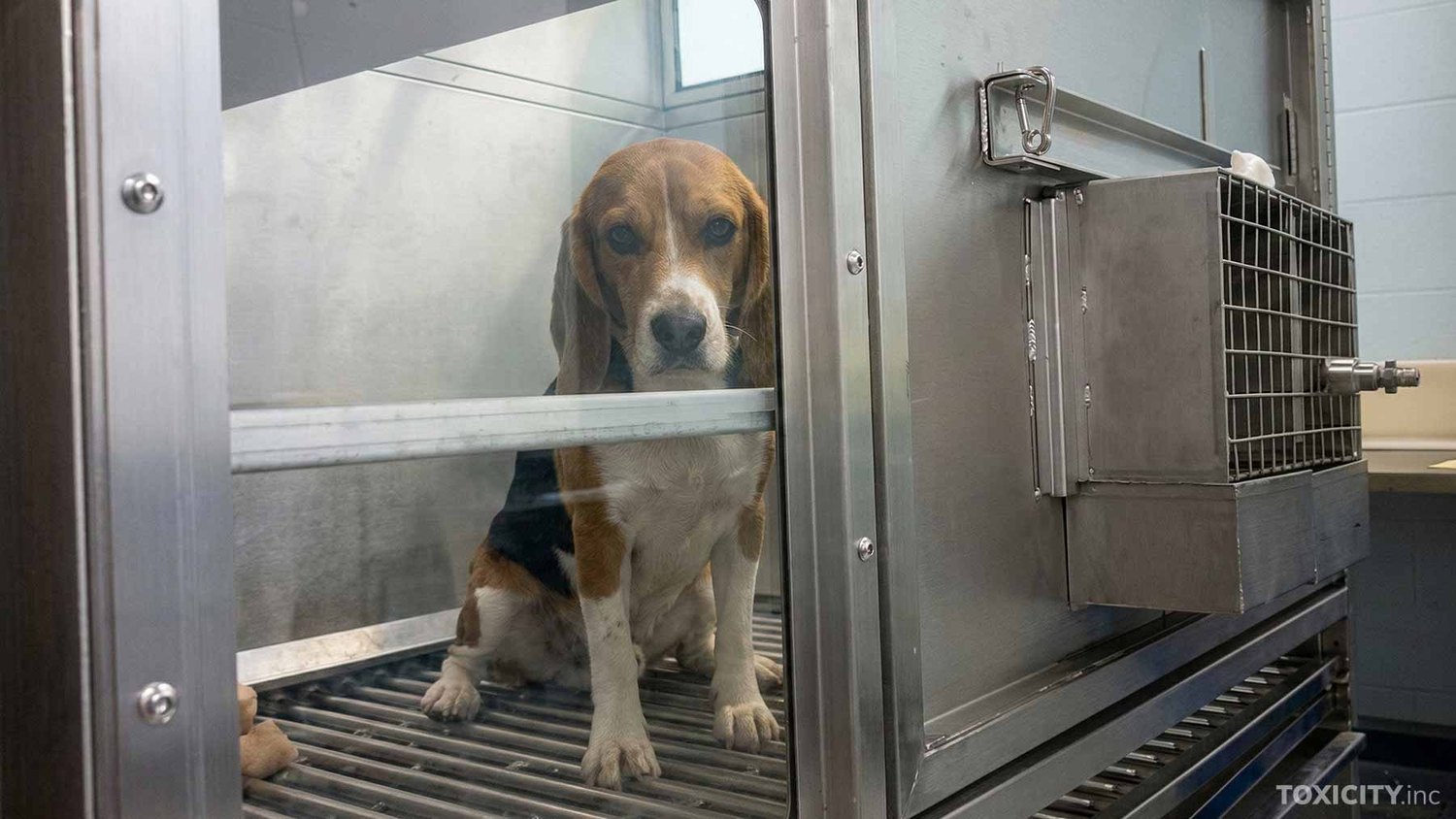
Why the government’s plan falls short
No end date for most animal use
The strategy points in the right direction, but it does not give the public a clear legal deadline for ending animal testing. A promise without a deadline can drift while animals continue to suffer.
For dogs: reduce, not end
The commitment that names dogs is only to reduce certain drug-tracking studies on dogs and monkeys by 2030. That still leaves years of beagles being used while the system moves slowly.
The biggest category is not properly tackled
In 2024, around half of experimental procedures were for basic research. A plan that focuses mainly on selected regulatory tests leaves much of the animal suffering untouched.
Some tests were already on the way out
The government highlights changes to specific tests such as skin and eye irritation, skin sensitisation and botulinum toxin potency testing. But some non-animal methods were already being accepted or developed. The harder question is why regulation has taken so long.
The numbers show why urgency matters
A small fall is not the same as a compassionate transition. If the government accepts that animal use should be replaced, then every year of delay means more animals bred, used and killed.
Even regulators now accept some animal studies are not needed
The MHRA has said that advances such as AI-driven analysis and human-derived cell models mean some medicines no longer require animal studies to demonstrate safety and efficacy. Its new route allows early review of non-animal data, giving developers more confidence when applying for medicines based on evidence generated without animal testing.
That matters because it shows the barrier is not simply science. Part of the barrier is regulation: what regulators are willing to accept, and how quickly they are willing to accept it.
Plain English bottom line
Alternatives already exist. More are being developed. The UK government says it wants to move away from animal testing. Parliament has heard concerns that the current strategy does not go fast or far enough.
For the dogs being bred and used now, slow progress is still suffering.
Where alternatives exist, they should be used. Where they do not yet exist, funding and regulation should be pushed harder toward replacement — not used as an excuse to preserve a cruel system.
Sources for this page
- GOV.UK: Replacing animals in science strategy
- GOV.UK: Animal testing to be phased out faster as UK unveils roadmap for alternative methods
- GOV.UK: MHRA action boosts drive to phase out animal testing
- Home Office: Annual statistics of scientific procedures on living animals, Great Britain 2024
- Hansard: Animal Testing debate, 27 April 2026